Saturday, June 20, 2009

Meanings Of The Runes

Meanings Of The Runes Cover

Book: Meanings Of The Runes by Bernard King

from The Elements of Runes by Bernard King.

As with all scripts, the runes grew and evolved with use, taking on different meanings in different areas. The Norwegian, Icelandic and Anglo-Saxon runic poems all provide variants which, for the beginner, serve to confuse the issue rather than clarifying it. Because of this I have consistently used the (reconstructed) Common Germanic names throughout this book.

While the role played by the runic poems must, because of their comparatively late dates, be suspect when attempting to consider the earliest assigned meanings of the rune-names, they served a useful mnemonic role at the time of their composition. In all probability there was a poem which gave the names of the Common Germanic Futhark, but it would have been too early, or too secret in later times, to have been recorded.

Download Bernard King's eBook: Meanings Of The Runes

Recommended reading (pdf e-books):

Nicolas Schreck - Demons Of The Flesh
Bernard King - Meanings Of The Runes

Saturday, June 13, 2009

Beautiful And Unique Rune Sets

Beautiful And Unique Rune Sets Image
Visit Magin's on-line shop to view her selection of clay and wood rune sets. Unlike many mass produced rune sets available, these runes are hand made and each rune is individually empowered using traditional rune craft and shamanic techniques.

In ancient times runes were used for divination and magic (INCLUDING HEALING), their energy being raised through carving their shapes and with the power of the voice. Rune practitioners were also skilled in the art of '"faring forth"' - journeying between the worlds or working over long distances to bring good (OR ILL) fortune. Modern practitioners continue these traditions and have also developed new techniques for working with the runes including the uses of incenses, body posture, crystals and spirit guides to enhance their divinatory, magical and healing skills.

In 2011 our level 1 RuneCrafting programme will be completed, offering courses in rune casting, rune making, rune crafting, Journeys with the Elder Futhark, and space balancing and protection techniques. The level 1 RuneCrafting programme will provide the foundation for more advanced, exploratory work with the runes - courses, groups and workshops at level 2 will start to appear over 2011/12. All the courses available on our RuneCrafting pages at present are componenents of the level 1 programme.

Source: www.magic-online-shop.de


Labels: greek gods and goddesses books  all about gods and goddesses  greek god odin  greek gods and goddesses coloring pages  facts on greek gods and goddesses  the book of shadows spells  god of the witches  lucid dreaming pictures  

Wednesday, June 10, 2009

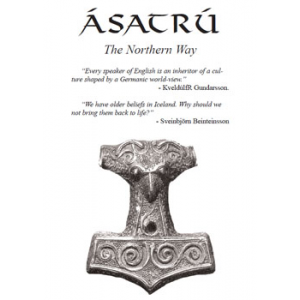
Asatru The Northern Way

Asatru The Northern Way Cover

Book: Asatru The Northern Way by Anthony Arndt

Asatro as a Reconstructionist movement was founded almost simultaneously in Iceland (Islenska Asatruarfelagid) and America (Asatru Free Assembly). This occurred in the early 1970s.

The historical basis for Asatro is Norse mythos, which may be up to 40,000 years old and originated in northern Europe.

It is very important though to note that Asatro and ancient norse religion are by no means same - they simply share mythology, and symbols, as religions they are however fundamentally different. The latter was a nature religion which primarily focused on pleasing gods, in exchange for basic material needs and provide protection from the forces of nature and enemies, whereas the latter is a New Age religion with more spiritual aims.

As our knowledge of the old norse religion is fairly scarce, and sources for Understanding the thinking of this ancient people even more limited, it is safe to assume that making an accurate reconstruction of the the norse religion is an impossibility, and would also serve little or no purpose.

Download Anthony Arndt's eBook: Asatru The Northern Way

Free eBooks (Can Be Downloaded):

Tommie Eriksson - Tree Cults In Northern Magic
Emilie Kip Baker - Stories From Northern Myths
Anonymous - Asatru And The Paranormal
Anthony Arndt - Asatru The Northern Way

Tuesday, June 2, 2009

Goddess Bertha

Goddess Bertha Cover Bertha: The White Lady, a birch goddess. (For more on the nature of birch Goddesses see the section on runes, under Berkana.) She is supposed to dwell in a hollow mountain, and the souls of unborn Children were in her keeping. She is patron of spinning and every Yule she went to every house where this art was practiced. Good spinners were rewarded with the goddess' own flax, but bad spinners, or those who failed to honor the goddess by eating enough of the right cakes at Yule were punished by her. She was also supposed to travel the world during Yule, followed sometimes by the dead or the souls of the unborn children and Tradition credits her with leaving gifts for good children and with either leaving birch twigs to punish the bad ones or to take them away with her in a sack.

Free e-books (can be downloaded):

Anonymous - Confessio Fraternitatis
Franceska De Grandis - Be A Goddess
Franceska De Grandis - Goddess Initiation

Monday, June 1, 2009

Sources Of Nordic Paganism

Sources Of Nordic Paganism Cover Although the Eddas and Sagas are by far the most respected and influential texts consulted by modern Nordic Pagans, other texts and sources of Information are widely shared and discussed. The Heimskringla, also written by Snorri Sturluson, is a semihistorical, semimythological account of ancient Norwegian kings that provides information about gods, ritual practices, and life and society on the Scandinavian mainland (as opposed to the Icelandic focus of the Sagas). Skaldic poems, an archaic Icelandic genre from Viking times, provide vivid accounts of warrior heroes and gods.

There are also non-Norse, non-Icelandic texts. The medieval Anglo-Saxon poem Beowulf, which tells of Scandinavian warrior life, is a valued literary treasure from England. More fragmentary Anglo-Saxon texts, such as the Nine Spells Charm (Rodrigues 1993), provide insight into the Anglo-Saxon variants of Norse Paganism—for example, the Norse Odin worshipped as the Anglo-Saxon Woden in England and the poem The Dream of the Rood, which blends Christian and Norse Pagan motifs in strange and startling ways. A fragmentary German text, the Merseburg Charm, tells of spells and incantations containing mythological information. The German epic Nibelungenlied is popular as an illustration of warrior ethics. German and Scandinavian folk and fairy tales are also valued as expressions of Nordic sensibility toward life and nature. The Gesta Danorum, a history of the Danes written in Latin by an antiquarian monk, Saxo Grammaticus, provides alternate and sometimes strikingly different accounts of Eddic myths and gods. The Roman historian Tacitus’s Germania, an account of German tribes on the fringes of the Roman Empire, is also studied with interest as the earliest documentary text related to Germanic-Scandinavian peoples. Most Nordic Pagans read these texts in English translation, but scholarly Pagans study these documents in their original languages.

Various nontextual sources of information about past Nordic life and culture are highly valued. Archaeological remains in the Scandinavian nations—from the ancient kings’ tombs in Denmark and Sweden to Viking tombstones and runic inscriptions on the Baltic island of Gotland to the site of the original Icelandic Thing parliament at Thingvellir—are sites of Nordic Pagan pilgrimage. Discussions of the history and significance of such sites are followed with intense interest in both popular and scholarly media, from documentary programs on the Discovery Channel television network to archaeological journals. Runes, the ancient Scandinavian writing and symbol system, receives intensive interest because of the widespread belief among modern Nordic Pagans that the runes possess esoteric, ritual significance.

Although it is doubtless true that modern Nordic Pagans take an extremely positive, even romanticized view of past Nordic history and culture, theirs is not an entirely uncritical view. They seek to reconstruct only select aspects of the worldview and lifestyle of the Vikings and other past Nordic peoples, and they acknowledge that there are other aspects, such as slavery and wanton violence, that they are all too happy to leave in the past. A good many Nordic Pagans follow scholarly debates about Nordic history and are conscious that the contemporary Understanding of the Nordic past is continuously evolving through the clash of multiple perspectives and interpretations, like modern Nordic Paganism itself.

Free eBooks (Can Be Downloaded):

Richard Roy - 13 Questions On Paganism And Wicca
Jean Seznec - Survival Of The Pagan Gods
William Phelon - Our Story Of Atlantis
Shri Gurudev Mahendranath - Notes On Pagan India
Yves Kodratoff - Seidr Seid Sol Iss Burs And Nordic Shamanism

Sunday, May 31, 2009

Northern Tradition For The Solitary Practitioner

Northern Tradition For The Solitary Practitioner Cover

Book: Northern Tradition For The Solitary Practitioner by Galina Krasskova

Northern Tradition for the Solitary practitioner is a ground-breaking look at the development of devotional work within the body of polytheistic religious traditions ranging from Theodism to asatru to Norse Paganism, that comprise the greater umbrella of the Northern Tradition. While interest in devotional and experiential work within these traditions has been growing rapidly over the past few years, this is the first book to offer an inclusive look at the diverse scope and breadth of such practices as a living, modern-day religion. It features an in-depth exploration of altar work, prayer, prayer beads, ritual work, sacred images, lore, and a thorough examination of the common core cosmology that forms the foundation of belief for the vast expanse of Northern Tradition communities.

Northern Tradition for the Solitary practitioner is clear review of Norse mythology, combined with modern viewpoints from many perspectives.Some practical devotional ideas that are stimulating. a great book to use as a spiritual starting point in this area.

Northern Tradition for the Solitary practitioner is not denomination-specific: rather, it seeks to provide an entry into interior practice for anyone involved in a branch of this broad family of traditions of the ancient Norse, Germanic, and Saxon peoples, using material suitable for the solitary, independent practitioner. Those outside of the Northern Tradition who wish to deepen their own devotional practice will find this book helpful in their own work, as well.

This important new title can be seen as a companion book to Galina Krasskova's Exploring the Northern Tradition or it can stand entirely on its own.

It can be very difficult to go it alone in a tradition that organizes itself in 'hearths' and 'kindreds'. This book is not fluffy-bunny, nor is it extremist towards one perspective or another. It provides the information one needs to begin structuring one's own practice. after years of having to adapt group-oriented practices to solitary observances, I found this book to be a treasured addition to my bookshelf. The language is direct, the tone is honest, and the author tries very hard to keep a balanced view of some hotly contested beliefs within the community.

Galina Krasskova is a free-range tribalist Heathen who has been a priest of Odin for more than a decade. Her primary interest is Heathen devotional work, and she has both written and lectured extensively on the subject. Krasskova is a Northern Tradition shaman currently residing in New York, where she is pursuing her masters in religious studies. She is the author of several books, including Exploring the Northern Tradition.

Raven Kaldera is a Northern-Tradition Pagan shaman, diviner, homesteader, activist, founding member of the First Kingdom Church of asphodel, and managing editor of asphodel Press. He has written and published numerous books and articles, including Urban Primitive and the Northern-Tradition Shamanism series.

Buy Galina Krasskova's book: Northern Tradition For The Solitary Practitioner

Free eBooks (Can Be Downloaded):

Shanddaramon - Self Initiation For The Solitary Witch
Scott Cunningham - Wicca A Guide For The Solitary Practitioner
Scott Cunningham - Living Wicca A Further Guide For The Solitary Practitioner

Friday, May 29, 2009

Religion Jesus In Indiduring The Lost Years And After Surviving Crucifixion

Religion Jesus In Indiduring The Lost Years And After Surviving Crucifixion Image
As i mentioned you in previous posts that Jesus (peace be upon him) traveled to India. He went there not only once, but evidences show that he went twice.

* Ancient scrolls reveal that Jesus spent seventeen years in India and Tibet.

* From age thirteen to age twenty-nine, he was both a student and teacher of Buddhist and Hindu holy men. Many of his gnostic (mystic) teachings thus have eastern philosophical influence.

* The story of his journey from Jerusalem to Benares was recorded by Brahman historians

* Today they still know him and love him as Saint Issa. Their 'buddha'. Bear in mind that Jesus is the latinized pronounciation of Christ's name. His Aramaic original name was Eashoa', Esa or Issa.

* Tibbetian scrolls record his teachings.

I wished i could compile all the research and evidences here in one post. but since i am on travel schedule, i can't for the moment. I give u here some very good links where u can explore more of such evidence. But this is just few sources. there are many more records and books on the facts.

I quote some evidences from the website Reluctant Messenger. They are recorded in ancient scrolls in Himalayas. A number of prominent researchers themselves have studied them and was convinced about their genuinity.

... He passed his time in several ancient cities of India such as Benares. All loved him because Issa dwelt in peace with Vaishas and Shudras (the lower cast people, and it was his own style that he always took side of the poor and neglected) whom he instructed and helped. But the Brahmins and Kshatriyas (higher caste) told him that Brahma forbade those to approach who were created out of his womb and feet. The Vaishas were allowed to listen to the Vedas only on holidays and the Shudras were forbidden not only to be present at the reading of the Vedas, but could not even look at them.

Issa said that man had filled the temples with his abominations. In order to pay homage to metals and stones, man sacrificed his fellows in whom dwells a spark of the Supreme Spirit.

Vaishas and Shudras were struck with astonishment and asked what they could perform. Issa bade them "Worship not the idols. Do not consider yourself first. Do not humiliate your neighbor. Help the poor. Sustain the feeble. Do evil to no one. Do not covet that which you do not possess and which is possessed by others."

Afterward, Issa went into Nepal and into the Himalayan mountains....

"Well, perform for us a miracle," demanded the servitors of the Temple. Then Issa replied to them: "Miracles made their appearance from the very day when the world was created. He who cannot behold them is deprived of the greatest gift of life. But woe to you, enemies of men, woe unto you, if you await that He should attest his power by miracle."

... At this time, an old woman approached the crowd, but was pushed back. Then Issa said,

"Reverence Woman, mother of the universe,' in her lies the truth of creation. She is the foundation of all that is good and beautiful. She is the source of life and death. Upon her depends the existence of man, because she is the sustenance of his labors. She gives birth to you in travail, she watches over your growth. Bless her. Honor her. Defend her. Love your wives and honor them, because tomorrow they shall be mothers, and later-progenitors of a whole race. Their love ennobles man, soothes the embittered heart and tames the beast. Wife and mother-they are the adornments of the universe."

"As light divides itself from darkness, so does woman possess the gift to divide in man good intent from the thought of evil. Your best thoughts must belong to woman. Gather from them your moral strength, which you must possess to sustain your near ones. Do not humiliate her, for therein you will humiliate yourselves. And all which you will do to mother, to wife, to widow or to another woman in sorrow-that shall you also do for the Spirit." (and now compare the view of woman by early christian church and actual teachings of Jesus !)

And then turning to the ruler, he said, "Why demean thy dignity and teach thy subordinates to live in deceit when even without this thou couldst also have had the means of accusing an innocent one?"

Near Lhasa was a temple of teaching with a wealth of manuscripts. Jesus was to acquaint himself with them. Meng-ste, a great sage of all the East, was in this temple.

Finally Jesus reached a mountain pass and in the chief city of Ladak, Leh, he was joyously

accepted by monks and people of the lower class.... And Jesus taught in the monasteries and in the bazaars (the market places); wherever the simple people gathered--there he taught.

... Among the Ladakis, Jesus passed many days, teaching them. And they loved him and when the time of his departure came they sorrowed as children.

Pls visit reluctant messenger for a well documented page here.Why in India?

Various writers, researchers and investigators have explored the notion that Jesus was no stranger to the East. Generally speaking, the resulting theories can be broken down into two main camps. Either they posit that Christ survived the crucifixion and travelled to India, usually via modern Iran and Afghanistan, or that he spent much of his 'lost years' (between the ages of 18 to 33, the period that goes unmentioned in the Gospels), travelling widely in the Far and Middle East. Some theories combine the two elements (which i personally support because he again went to India after surviving the crucifixion because he already knew the place and the people there, so its very logical and rational that he went there again).

But why would Christ have set out on a journey to the East? Apart from the obvious need to escape the clutches of the oppressive Roman Empire there is, perhaps, a more fundamental reason, one bound up with the notion that Jesus was actually searching for his roots.

"These twelve Jesus sent forth, and commanded them, saying, Go not into the way of the Gentiles, and into any city of the Samaritans, enter ye not: but go rather to the lost sheep of the house of Israel." (Matthew 10: 5 what happened to the remaining 10 has long been a matter of debate. Many believe they settled in areas including Egypt, Persia, Iran and Africa. Another region believed to have been the final destination for some of the homeless Jews was Northern India or Kashmir. continue reading here.

(quoted from Fortean Times)

Another very good source of scholarly work about the evidences that Jesus survived his crucifixion and went to India is in the magazine called Knowledge of Reality (www.kor.org)

What does Quran and Prophet Muhammad tells about Jesus:


And many of my muslims friends have questioned, does the Quran- The Final Testament support it ? This is because what happened to Jesus after crucifixion is also not made clear to muslims for long time (because of biased interpretations) and people didn't pay much attention to the fact cause they r mostly happy with irrational, fantasy like stories when it comes to religion.

Interestingly Quran was revealed to mankind after about 600 years of Jesus's passing exactly the time when his original teachings started to fade away and was replaced by man made doctrines. Quran in fact clears a lot of misconception about Jesus and his holy mother Marry. Read here for exact verses of Quran.

But to be precise in Quran and the sayings of Prophet it is clear that

1. Jesus didn't die on cross. But it was made apparent to them (and its recorded in Gospels how little time Jesus was on the cross, yet people took him for dead which he was not)

2. Jesus had a natural death.

3. God exalted him to a higher place (which is an allegory meaning both the rank of Jesus raised very high and also points to the fact that Jesus took refuge in Kashmir, which is one of the most higher point on earth).

4. Quran says very clearly that all Prophet and Messenger of God had to face death. None is given immortality.

I will elaborate the view of Quran and Prophet Muhammad (peace) sayings in another post, because they need some explanation. But for the moment, here are the verses from the Final Testament about Jesus Christ.

:: A very good resource: The Unknown life of Jesus by Nicolas Notovitch

:: compiled and written from London. May God show us the things as they really are. Amen

[+] Please visit MysticSaint.Info For full multimedia experience and enjoy special music.

Blessings,
Sadiq