Thursday, September 30, 2010

What Is In A Word

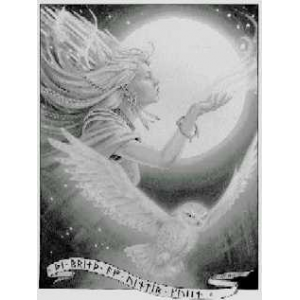
What Is In A Word Cover 'IN the beginning was the Word' , a statement found at the beginning of the Hebrew Bible, is a typical word-play used to subtly twist the truth. ' The Word ' is attributed to the god Jehovah, a wrathful and destructive demon, and so all of creation is attributed to the destroyer. In reality the statement has a far different meaning.

' Word ' in modern German is ' wurt '; but in Old High German ' wurt ' meant ' wyrd '; the Saxon for wyrd was ' word ', phonetically similar to ' word '. The Norse ' Orlog ' contains the word ' Log ' meaning ' layers ', which in turn may have the same root as the Latin ' logos ', ' words . ' Log ' is also a record of events and so implies ' past events '. So this phrase, in truth, should be, ' In the beginning was the Wyrd '. A very different concept:

And so it was, is and will be! The Wyrd was first; the cosmic mind that drives the wheel of fate and mysteriously hides a changing pattern of unfolding evolutionary destiny. The rune Perthro is a dice-cup, the container that throws the dice in the game of life of which we, the gods, elves and all beings participate. It is the opening womb of the Earth Mother, giver of life, and at the time of birth we begin to work out our fate. Behind the ' chance ' of the dice throw is a pattern of evolution of which we form a part. We are woven by the Wyrd Sisters into the loom of fate, on to the Web of Wyrd, in a pattern with all the other beings of existence and our own destiny appears upon the pattern. And what we do will affect what we are in the future: the past determines the future.

Interestingly, the Norse Orlog is very similar to a Flemish (Dutch) word ' oorlog ' which means 'war'. The word war appears to derive from an Aryan root-word having the following meanings:

1. to will/choose,
2. to speak;
3. to wind or turn.

'To choose' reminds us of the Valkyries, Choosers of the Slain, an aspect of the Wyrd Sisters. 'To speak' implies 'the Word'. 'To wind/turn' implies the cyclic motion of the cosmos and 'wind' can be applied to a spring/spiral. Is the cosmos not a constant 'war' of opposites, the eagle battling with the serpent on the World Tree? And are we not a part of this constant war? And from this struggle emerges the evolutionary drive of the Wyrd , the cosmic mind.

Free eBooks (Can Be Downloaded):

Anonymous - What Is Wicca Article 2
Stephen Mcnallen - What Is Asatru
Lil Bow Wow - What Is A Warlock

Baldur Dream

Baldur Dream Cover

Book: Baldur Dream by Wh Auden

Baldrs draumar (Baldr's dreams) or Vegtamskvida is an Eddic poem, contained in the manuscript AM 748 I 4to. It relates information on the myth of Baldr's death in a way consistent with Gylfaginning.

Baldr has been having nightmares. Odin rides to Hel to investigate. He finds the grave of a volva and resurrects her. Their conversation follows, where the volva tells Odin about Baldr's fate. In the end Odin asks her a question which reveals his identity and the volva tells him to ride home.

The poem is one of the shortest Eddic poems, consisting of 14 fornyrdislag stanzas. Some late paper manuscripts contain about five more stanzas, those are thought to be of young origin. Sophus Bugge believed them to have been composed by the author of Forspjallsljod.

Download Wh Auden's eBook: Baldur Dream

Free eBooks (Can Be Downloaded):

Steve Roberts - Zhine Tibetan Dream Yoga
Aleister Crowley - Alexandra
Rabbi Michael Laitman - Kabbalah Revealed
Aristotle - On Dreams
Wh Auden - Baldur Dream

God Tyr

God Tyr Cover Tyr is one of the more important Gods because of his strong interest in law, order, and justice. He is renowned for his personal sacrifice to safeguard Asgard from the Fenris wolf. It is told that the wolf broke its original bonds so the Gods schemed to use another extra strong chain. The wolf wouldn’t let the Gods bind him unless one of them put their hand in the wolf’s mouth as assurance that there was no trick. Tyr, knowing the price he would pay, offered his hand, thus allowing the Gods to bind the Fenris wolf. In anger, the wolf took Tyr’s hand.

Who then was Tyr? In Old English he was Tiw or Tig, in German Ziu, in primitive Germanic Tiwaz. What little we know about the tribe(s) who spoke the Indo-European mother tongue(s) about 2,500 BCE suggests that they worshipped a chief god, the Sky Father, called Dieus (implying straightforwardly 'god') or Dieus-p'ter (meaning 'god(the)-father'), and an Earth Mother, putatively called Dieu-mater ('goddess-mother'). She gave her name to Da Mater or Demeter in Greek, which is cognate with Diu-no or Juno in Latin. Her name did not survive in Germanic, but of course the archetype of the goddess-mother did.

Even the scholars are baffled by Tyr. They trivialise our religion by suggesting he is a god 'who has come down in the world'. Brian Branston, in 'The Lost Gods of England', says that Tiwaz, which is Tyr's name in early Germanic, 'sank in the social scale and was no longer regarded by the North West European tribes in the later years as Sky Father but had dwindled to a lesser god, a god of war and soldiers'.

Tyr is said to be the bravest. A person who exceeds all others is thus called Ty-brave. He is also a very wise god, and so the highly intelligent are called Ty-wise. He is identical to Teiwaz, described by Tacitus in his study of the Germani. As such it seems he was the original sky-father, and ruler of the pantheon, and god of war before Odin took over these attributes. He is a god of social order, and of justice. He would be prayed to for skill in combat, for it was an art he was most skilled in. He would also be prayed to for victory in legal matters, though this is usually a matter of praying for strictly interpreted justice. He is not a god of peace and is said to be one who is not known to settle quarrels amongst men. He is a god of honor, sticking strictly to the word given. There is more on Tyr in the section on runes, under the Tyr rune. Tyr's men and Odin's men are famous for not seeing things eye-to-eye.

Free eBooks (Can Be Downloaded):

Aleister Crowley - Songs For Italy
Anonymous - Magic And Wyrd
Aleister Crowley - World Tragedy
Aleister Crowley - Duty

Norse Mythology Legends Of Gods And Heroes

Norse Mythology Legends Of Gods And Heroes Cover

Book: Norse Mythology Legends Of Gods And Heroes by Peter Andreas Munch

The Norwegian original on which the present translation is based was written by Peter Andreas Munch, the founder of the Norwegian school of history. Munch’s scholarly interests embraced also many related subjects, such as general history, archaeology, geography, ethnography, linguistics, and jurisprudence. His varied labors have in large part stood the test of time. His most important work, the “History of the Norwegian People” (Det norske folks historie, 8 vols. 1851–63) covering the period of Norway’s ancient independence ending with the Kalmar Union of 1397, still remains a source book and a point of departure for historians. The great significance of Munch’s scholarship lies in its influence upon the modern renascence of Norwegian culture. In the middle of the nineteenth century he was the most conspicuous intellectual force in the country, as Wergeland had been before him and as Bjornson came to be after him. The national spirit in Norway, which has steadily gained strength, owes a heavy debt to the gifted leaders of an earlier generation, not least among whom was Munch. As an historian, as an editor of Old Norse poetry and saga, as a recorder of the venerable myths and legends of the race, he did yeoman service in establishing a sense of historical continuity between the Norway of the past and the Norway of the present. Since his day, Norwegians have labored in the fields of history, folklore, and related subjects, deepening and strengthening that fruitful sense of national consciousness which he did so much to awaken.

Munch’s handbook of Norse Mythology, which first appeared in 1840, was originally written as a supplementary volume to a school text on the history of Norway, Sweden, and Denmark. As a book for students and as a work of general reference it has maintained its popularity. The third edition (1922) from which the translation is made, was prepared by Professor Magnus Olsen of the University of Oslo, in response to the demand for an up-to-date treatment of the entire subject. He found it advisable, however, to revise Munch’s work rather than to attempt a wholly original book, since he was thus able to incorporate the results of later research in a volume which had long enjoyed both popular and scholarly approval. The value of Munch’s work has been greatly increased through Professor Olsen’s revision.

The English translation is intended as a companion volume to two other books published in the SCANDINAVIAN CLASSICS series, The Prose Edda, translated by Arthur Gilchrist Brodeur, and The Poetic Edda, translated by Henry Adams Bellows. Norse mythology will serve alike the student of Old Norse literature, and the general reader who seeks an authoritative guide through the world of Northern myth and legend. My thanks are due to Professor Magnus Olsen for permission to translate the work, and to Professor William Witherle Lawrence, of Columbia University, Chairman of the Publications Committee of the American-Scandinavian Foundation, for many valuable suggestions. - S. B. H.

Download Peter Andreas Munch's eBook: Norse Mythology Legends Of Gods And Heroes

Free eBooks (Can Be Downloaded):

Michael Jordan - Dictionary Of Gods And Goddesses
Kathleen Daly - Norse Mythology A To Z
Peter Andreas Munch - Norse Mythology Legends Of Gods And Heroes

Anglo Saxon Heathendom And Icelandic Asatru

Anglo Saxon Heathendom And Icelandic Asatru Cover

Book: Anglo Saxon Heathendom And Icelandic Asatru by Eric Wodening

The ancient Germanic peoples essentially followed the same religion. Nearly all of them appear to have worshipped the major gods known to us from Norse mythology - Odinn, PorR, FreyR, and so on. They also believed in many of the same "spirits" or wights--elves dwarves, thurses, and so on. They held various festivals, rituals, and customs in common. This is not to say that there were not differences among the tribes in their religious customs and beliefs. There was always some variation in religious practices and beliefs among the Germanic peoples.

Perhaps the best demonstration of both the similarities and the differences which sometimes existed in the religious beliefs of the Germanic peoples would be to examine the respective beliefs of the Anglo-Saxon and Icelandic heathen.

It must be noted right away that the ancient Germanic peoples lacked a name for their religion or its branches. An ancient Anglo-Saxon heathen if asked about his religion would probably have referred to it simply as min beodisc gelefa, "my tribe's belief." The Icelanders may have responded along similar lines, although today this ancient and modern branch of the Germanic heathen religion is called "Asatru." For simplicity's sake, we will use "Anglo-Saxon heathendom" and "Asatru" for the faiths of the ancient Anglo-Saxons and Icelanders respectively..

Download Eric Wodening's eBook: Anglo Saxon Heathendom And Icelandic Asatru

Free eBooks (Can Be Downloaded):

Louis Claude De Saint Martin - Man His True Nature And Ministry
Stephen Flowers - The Galdrabok An Icelandic Grimoire
Eric Wodening - Anglo Saxon Heathendom And Icelandic Asatru

Wednesday, September 29, 2010

Germanic People Runes

Germanic People Runes Cover Runes were known to Germanic peoples of the far North long before the Viking age began. The very beginnings of the use of the Runes are unknown, but the Vikings believed that the God Odin got them by hanging on the tree Yggdrasil. The name of this alphabet - Futhark, came to being by just taking the first letters of the first six Runes. Thousands of Runic inscriptions were uncovered on territories where the Vikings once roamed, sometimes even far from the borders of their lands. The inscriptions were most often engraved in stone, but there are examples of Runes engraved in metal, wood, bones and horns. Their use was varied: some were used just as road marks, while others would contain more serious texts. It's those inscriptions that hold invaluable informations for us about the life of the Nordic peoples. Most of them were made to honour the dead, however all these inscriptions also contain some other interesting information – founding of administrative centres, land ownership, oversea voyages, family relations, individual wealth, a person's status or even the beauty of a woman. Naturally, not all the Rune stones have survived to date. A lot of them were destroyed by Christian priests who thought these stones brought back memories of the pagan past. Others were destroyed by ignorants who didn't realize their worth and mostly used them as building material. Unfortunately, these cultural Heritage artefacts are destroyed even today, by various vandals; nevertheless, this happens a lot less than before.

There are three types of Futhark: Elder, Anglo-Saxon and the Younger Futhark. The Elder Futhark was used up to the 5th century A.D.; it consisted of 24 Runes divided into three groups called aettir(“families”). Anglo-Saxon Futhark was created in Britain during the 5th century A.D. by Anglo-Saxon peoples (Saxons, Angles); it was used until the 11th century. The Younger (Scandinavian) Futhark was used sporadically in Scandinavia, most of all Denmark and Sweden up to the 17th century. This alphabet was most often found engraved on jewellery, stones, weapons, wood, but very little on the discovered manuscripts. Here, we will explore the Elder Futhark, the oldest Runic alphabet used in parts of Europe populated by Germanic peoples, including Scandinavia; this is also the the Futhark we consider to be the most functional.

Free eBooks (Can Be Downloaded):

Bernard King - Meanings Of The Runes
Samael Aun Weor - Magic Runes
Karl Hans Welz - Armanen Runes

Ehwaz Rune

Ehwaz Rune Cover Ehwaz means horse. In the Nordic tradition, the horse was a sacred animal, the same as in the old Slavic tradition. This animal was connected to Frey, which we find out in the saga of Hrafnkel, Frey's priest. A modern person can hardly realize what kind of a relationship his Ancestors had with the horse, or the specific connexion there was between a man and his faithful companion. This relationship was based on mutual trust and absolute devotion. Therefore, unlike the tamed force we have in Thurisaz, in Ehwaz the relationship between the ruling and the ruled is somewhat different, because the horse is not only a man's servant but also his faithful friend and helper. Because of that the sense of this Rune isn't in the control and subduing but in the mutual exchange of energy, an exchange that goes on between two beings that mutually respect and complement each other. It's the Rune's symmetrical shape that points out to harmony and energetic balance. Communication, as a sort of energetic exchange is also connected to this Rune. Beside that, Ehwaz is connected to journeys as well, seeing that then the horse was also the main means of transportation.

Divination:

Positive meaning: improvement, harmony, team work, loyalty, faithfulness.

Negative meaning: mistrust, isolation, betrayal.

Free eBooks (Can Be Downloaded):

Stephen Flowers - Runa
Ralph Blum - The New Book Of Runes
Stephen Flowers - Black Runa
Karl Hans Welz - Armanen Runes
Samael Aun Weor - Magic Runes