Monday, July 27, 2009

Swedish Asatru Society In Scandinavia

Swedish Asatru Society In Scandinavia Cover In Scandinavia, the Swedish Asatru Society formed in 1994, and in Norway the Asatrufellesskapet Bifrost formed in 1996 and Foreningen Forn Sed formed in 1999. They have been recognized by the Norwegian government as a religious society, allowing them to perform "legally binding civil ceremonies" (i. e. marriages). In Denmark Forn Sidr also formed in 1999 (and recognized by the state in 2003) and in Sweden Natverket Gimle formed in 2001, as an informal community for individual heathens. Natverket Forn Sed formed in 2004, and has a network consisting of local groups (blotlag) from all over the Sweden.

Free eBooks (Can Be Downloaded):

Mindy Macleod - Bandrunir In Icelandic Sagas
Miac - Asatru And Odinism
David Robertson - Magical Medicine In Viking Scandinavia
William Alexander Craigie - Religion Of Ancient Scandinavia

Sunday, July 26, 2009

Yule Celebrations In Shetland Islands

Yule Celebrations In Shetland Islands Cover Yule or Yule-tide is a winter festival that was initially celebrated by the historical Germanic peoples as a pagan religious festival, though it was later absorbed into, and equated with, the Christian festival of Christmas. The festival was originally celebrated from late December to early January on a date determined by the lunar Germanic calendar. The festival was placed on December 25 when the Christian calendar (Julian calendar) was adopted. Some historians claim that the celebration is connected to the Wild Hunt or was influenced by Saturnalia, the Roman winter festival.

Terms with an etymological equivalent to “Yule” are still used in the Nordic Countries for the Christian Christmas, but also for other religious holidays of the season. In modern times this has gradually led to a more secular tradition under the same name as Christmas. Yule is also used to a lesser extent in English-speaking countries to refer to Christmas. Customs such as the Yule log, Yule goat, Yule boar, Yule singing, and others stem from Yule. In modern times, Yule is observed as a cultural festival and also with religious rites by some Christians and by some Neopagans.

In the Shetland Islands of Scotland the Yules are considered to last a month beginning on December 18 and ending January 18. The main Yules celebration occurs on December 31. The rest of Scotland eventually adopted “Hogmanay” (the name of the New Years presents) as the name for the festival.

Free eBooks (Can Be Downloaded):

Mindy Macleod - Bandrunir In Icelandic Sagas
Richard Roy - 13 Questions On Paganism And Wicca
Sean Seymour - Celtic Myths Influence In Britain And Ireland
John Linwood Pitts - Witchcraft And Devil Lore In The Channel Islands

Thursday, July 16, 2009

The Poetic Edda

The Poetic Edda Cover

Book: The Poetic Edda by Lee Hollander

This is an excellent Translation of the poetic eddas which form the basis for what we currently know about Nordic mythology. The author maintains the structure of the original and mmakes a genuine attempt at alliteration in modern english. A previous reviewer noted a problem with some of the vocabulary being unfamiliar and indeciferable, but that is the beauty of this translation, it attempts to use germanic and older english constructions to give one the feel of the original. All the vocabulary used that is not contemporary can be found glossed at the back of the book or should be available in a quality dictionary like the OED. If you are interested in Nordic culture then this is the book you want for a translation of the poetic eddas (it is also an excellent crutch for those studying old norse and making an attempt to read the eddas in the original).

The translation may indeed be regarded as the crowning achievement of a great scholar." --Scandinavian-American Bulletin The Poetic Edda comprises a treasure trove of mythic and spiritual verse holding an important place in Nordic culture, literature, and heritage. Its tales of strife and death form a repository, in poetic form, of Norse Mythology and heroic lore, embodying both the ethical views and the cultural life of the North during the late heathen and early Christian times. Collected by an unidentified Icelander, probably during the twelfth or thirteenth century, The Poetic Edda was rediscovered in Iceland in the seventeenth century by Danish scholars. Even then its value as poetry, as a source of historical information, and as a collection of entertaining stories was recognized. This meticulous translation succeeds in reproducing the verse patterns, the rhythm, the mood, and the dignity of the original in a revision that Scandinavian Studies says "may well grace anyone's bookshelf.

This is a translation of the Poetic Edda that attempts to keep every potent inch of it. For those looking for an easy read, its not. But this never should attempt to be an 'easy read' in the first place. That isn't the goal of the Poetic Edda. If you want to lazily learn about Norse Mtyhs, there are a lot of other options out there.
"The Norse Myths" by Kevin-Crossley-Holland, for example. Easy to read, easy to understand, very accessible that book is. As massivly indepth and insightful as the Poetic Edda is, it is not.

If you want to actually get into the knitty gritty of Norse Mythology, if you actually want to examine it for what it is. This is the ticket. Any attempt to easy it down, would detract from the value of the knowledge carried with in it, which should be exactly what anyone reading this should want to avoid.

Hollander gives us the Kennings as they are, and explains them for what they are. He gives us a description about each text, what it went through to get to use today. If its missing parts, interloping, and general meaning. As well as a description of how the poems should be read.

There are some old words like 'ere' and others that might not ring any bells. They allow the translater to stay a bit more true to the original text. You might have to make a bit of an effort at first whenever one pops up to look to understand it. But its not a steep learning curve, it is English.

This is essential for anyone who is genuinely interested in the Poetic Edda. Meanwhile, anyone looking for stories of Norse myths to idly entertain them, you should probably play down to something more simple.

Buy Lee Hollander's book: The Poetic Edda

Books in PDF format to read:

Tuesday Lobsang Rampa - The Third Eye
Starhwak - The Spiral Dance
Morwyn - The Golden Dawn
Snorri Sturlson - The Prose Edda Ver 2

Saturday, June 20, 2009

Meanings Of The Runes

Meanings Of The Runes Cover

Book: Meanings Of The Runes by Bernard King

from The Elements of Runes by Bernard King.

As with all scripts, the runes grew and evolved with use, taking on different meanings in different areas. The Norwegian, Icelandic and Anglo-Saxon runic poems all provide variants which, for the beginner, serve to confuse the issue rather than clarifying it. Because of this I have consistently used the (reconstructed) Common Germanic names throughout this book.

While the role played by the runic poems must, because of their comparatively late dates, be suspect when attempting to consider the earliest assigned meanings of the rune-names, they served a useful mnemonic role at the time of their composition. In all probability there was a poem which gave the names of the Common Germanic Futhark, but it would have been too early, or too secret in later times, to have been recorded.

Download Bernard King's eBook: Meanings Of The Runes

Recommended reading (pdf e-books):

Nicolas Schreck - Demons Of The Flesh
Bernard King - Meanings Of The Runes

Saturday, June 13, 2009

Beautiful And Unique Rune Sets

Beautiful And Unique Rune Sets Image
Visit Magin's on-line shop to view her selection of clay and wood rune sets. Unlike many mass produced rune sets available, these runes are hand made and each rune is individually empowered using traditional rune craft and shamanic techniques.

In ancient times runes were used for divination and magic (INCLUDING HEALING), their energy being raised through carving their shapes and with the power of the voice. Rune practitioners were also skilled in the art of '"faring forth"' - journeying between the worlds or working over long distances to bring good (OR ILL) fortune. Modern practitioners continue these traditions and have also developed new techniques for working with the runes including the uses of incenses, body posture, crystals and spirit guides to enhance their divinatory, magical and healing skills.

In 2011 our level 1 RuneCrafting programme will be completed, offering courses in rune casting, rune making, rune crafting, Journeys with the Elder Futhark, and space balancing and protection techniques. The level 1 RuneCrafting programme will provide the foundation for more advanced, exploratory work with the runes - courses, groups and workshops at level 2 will start to appear over 2011/12. All the courses available on our RuneCrafting pages at present are componenents of the level 1 programme.

Source: www.magic-online-shop.de


Labels: greek gods and goddesses books  all about gods and goddesses  greek god odin  greek gods and goddesses coloring pages  facts on greek gods and goddesses  the book of shadows spells  god of the witches  lucid dreaming pictures  

Wednesday, June 10, 2009

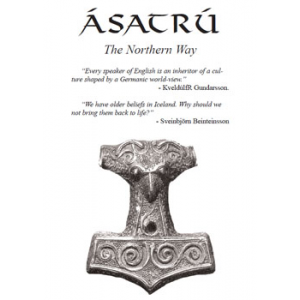
Asatru The Northern Way

Asatru The Northern Way Cover

Book: Asatru The Northern Way by Anthony Arndt

Asatro as a Reconstructionist movement was founded almost simultaneously in Iceland (Islenska Asatruarfelagid) and America (Asatru Free Assembly). This occurred in the early 1970s.

The historical basis for Asatro is Norse mythos, which may be up to 40,000 years old and originated in northern Europe.

It is very important though to note that Asatro and ancient norse religion are by no means same - they simply share mythology, and symbols, as religions they are however fundamentally different. The latter was a nature religion which primarily focused on pleasing gods, in exchange for basic material needs and provide protection from the forces of nature and enemies, whereas the latter is a New Age religion with more spiritual aims.

As our knowledge of the old norse religion is fairly scarce, and sources for Understanding the thinking of this ancient people even more limited, it is safe to assume that making an accurate reconstruction of the the norse religion is an impossibility, and would also serve little or no purpose.

Download Anthony Arndt's eBook: Asatru The Northern Way

Free eBooks (Can Be Downloaded):

Tommie Eriksson - Tree Cults In Northern Magic
Emilie Kip Baker - Stories From Northern Myths
Anonymous - Asatru And The Paranormal
Anthony Arndt - Asatru The Northern Way

Tuesday, June 2, 2009

Goddess Bertha

Goddess Bertha Cover Bertha: The White Lady, a birch goddess. (For more on the nature of birch Goddesses see the section on runes, under Berkana.) She is supposed to dwell in a hollow mountain, and the souls of unborn Children were in her keeping. She is patron of spinning and every Yule she went to every house where this art was practiced. Good spinners were rewarded with the goddess' own flax, but bad spinners, or those who failed to honor the goddess by eating enough of the right cakes at Yule were punished by her. She was also supposed to travel the world during Yule, followed sometimes by the dead or the souls of the unborn children and Tradition credits her with leaving gifts for good children and with either leaving birch twigs to punish the bad ones or to take them away with her in a sack.

Free e-books (can be downloaded):

Anonymous - Confessio Fraternitatis
Franceska De Grandis - Be A Goddess
Franceska De Grandis - Goddess Initiation